

Baby Boomers Will Redefine Senior Living Expectations
Baby Boomers are bringing new expectations into senior living. They are used to choice, convenience, personalization, and experiences that feel connected to the life they already know. For operators, the opportunity is not simply to add more programs or more manual work. It is to build scalable personalization, using shared resident insights to create communities that feel more personal, flexible, and meaningful without adding operational chaos.

Why C-Suite Should Own the Resident Experience
Resident experience is now one of the most visible parts of a senior living brand, shaping how prospects, families, and residents understand the value of a community across websites, tours, calendars, newsletters, and daily interactions. For enterprise operators, the opportunity is to make that experience more consistent, visible, and scalable while still giving local teams the flexibility to reflect the people, programs, and moments that make each community unique.

Resident Experience Is Now an Operating Strategy
Senior living operators can no longer treat resident experience as a soft hospitality metric. Poor experience creates a “leaky bucket,” impacting move-outs, care escalation, referrals, family satisfaction, occupancy stability, and NOI. Elizabeth Audette-Bourdeau explores why the next era of senior living will be defined not only by who can attract residents, but by who can keep them well, connected, and meaningfully engaged after move-in.

Moving from Activity Outputs to Resident Outcomes
Senior living operators routinely measure life enrichment by operational outputs: calendar volume and event counts. This creates a critical blind spot. A community can host 50 events a week, but if vulnerable residents are isolating in their rooms, the programming is failing. To maximize asset value and extend resident length of stay, executives must shift from tracking staff busyness to measuring real resident outcomes.

Rethinking Total Cost of Care in Long-Term Care
At LTC100, one question surfaced repeatedly in conversations with operators: how do we reduce move-outs? The answer often begins much earlier than most communities are equipped to see, in the small changes that shape a resident’s daily experience over time.

The Staff Who Know Everything (And the Systems That Don't)
The frontline staff in senior living communities hold irreplaceable knowledge about residents. Elizabeth Audette-Bourdeau explores what happens when that knowledge walks out the door, and what it would take to build systems worthy of preserving it.

The Expectation Gap
The generation moving into senior living today expects to be known as individuals, not just cared for at scale. Elizabeth Audette-Bourdeau explores the growing gap between resident expectations and community experience, and what it takes to close it.

What We Measure vs. What Matters
Senior living has never had more data. But are we measuring what actually matters for residents? Elizabeth Audette-Bourdeau explores the gap between operational outputs and real resident outcomes, and what it would take to close it.

The Most Important Conversation We're Not Recording
Move-in is the most emotionally loaded moment in the senior living journey. Families arrive carrying everything they know about their loved one, hoping someone on the other side of that desk is going to receive it. Most of the time, someone does. And then the day ends, and most of what was shared lives only in the memory of whoever was in the room.

The Information Gap in Senior Living
Senior living communities are collecting more resident data than ever, yet many still struggle to create truly personalized experiences. A key challenge is the gap between structured assessments and the rich insights staff gather through everyday conversations. This article explores how conversational AI can help bridge that gap by capturing unstructured resident information, building more holistic profiles, and enabling communities to deliver more personalized care and engagement at scale.

The Hidden Problem in Senior Living Isn’t Technology
Senior living communities are rapidly adopting AI, but many struggle to see real impact. The challenge is not the technology itself, but how it fits into everyday workflows and supports staff. This article explores how conversational AI and better data practices can improve resident engagement, drive staff adoption, and ultimately support longer, healthier lives for residents.
From Data Silos to Resident Insight at SL100
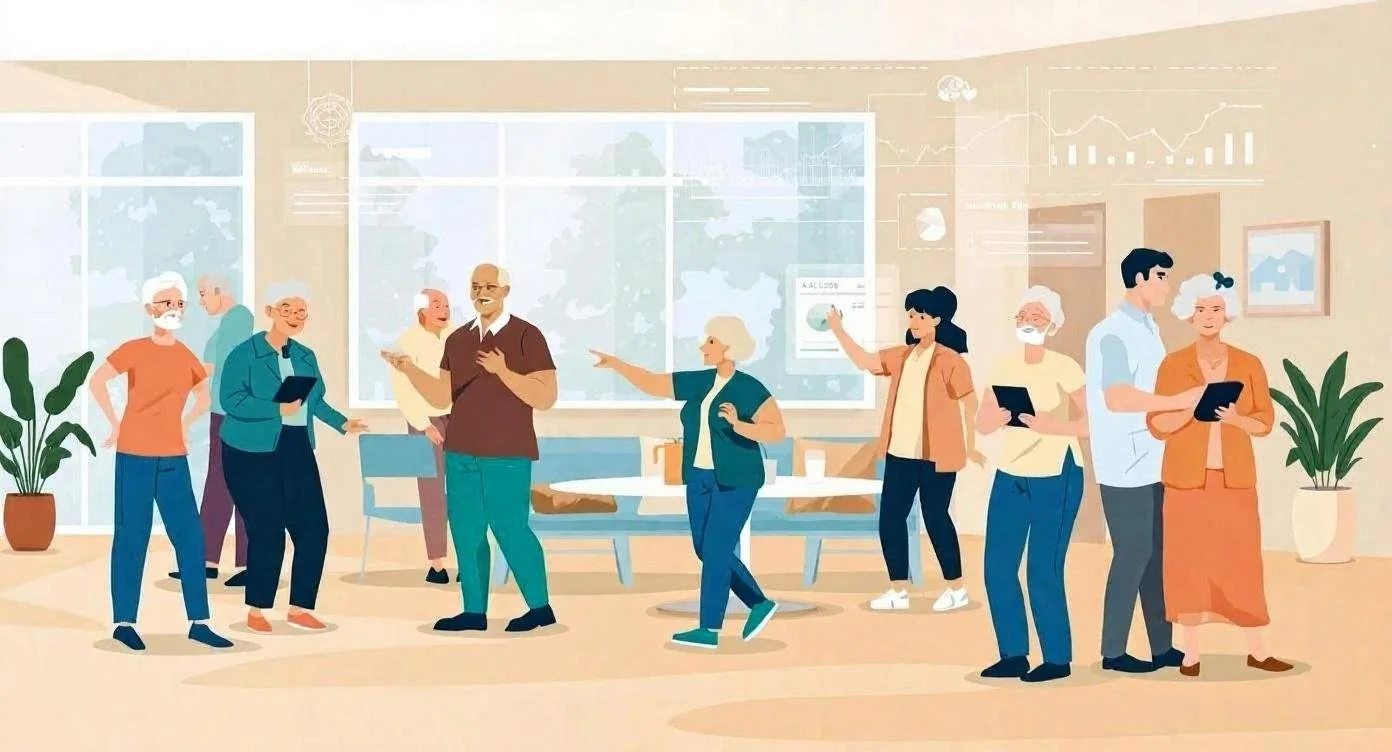
Most senior living communities already have the data they need. The real challenge is using it. From SL100 conversations, a clear priority emerged: connecting fragmented systems to guide better decisions for residents and staff. Learn how leading operators are moving from intuition to insight to improve engagement, satisfaction, and occupancy.